
Wind Mitigation Frequent Questions
❓ Wind Mitigation Questions (What Actually Impacts Your Insurance)
🪟 If I install shutters, am I guaranteed to get insurance discounts?
Not always — and this is where a lot of homeowners get surprised.
The amount of discount you receive depends heavily on where the property is located in Florida.
In areas like Broward County and Miami-Dade County, which are considered high-velocity hurricane zones, opening protection is extremely important. In those regions, adding shutters or impact windows can lead to significant savings — sometimes in the range of 30% to 40% of the insurance premium.
However, in inland areas like Orlando, the risk profile is different. Because these areas are less exposed to direct hurricane impact, the discounts for window protection tend to be smaller. That’s why you’ll often see newer homes in Orlando built without impact windows, while in South Florida they are almost standard.
👉 The best approach is to check with your insurance broker before investing in upgrades. They can give you a realistic expectation of what the discount would be for your specific property.
🚪 I only have one door with glass — why am I losing my discounts?
This is a very common situation, especially in South Florida.
From an insurance perspective, any glazed opening — meaning anything with glass — is treated the same way as a window. That includes:
Doors with glass inserts
Garage doors with acrylic or glass panels
Any opening that allows pressure to enter the home
The issue is that the system works as a whole.
👉 If even one opening is not protected, it can disqualify the entire property from receiving opening protection credits.
This is because, during a wind event, a single unprotected opening can allow pressure inside the home — and that pressure can lead to roof or structural damage.
🛠️ If only one opening is not protected, can I fix just that one?
Yes — and this is often the most practical solution.
If the issue is limited to one or two openings:
You can install shutters for those specific areas
Or upgrade that door or opening
Once all openings are properly protected, the home can qualify again for the credit.
👉 You do not need to replace everything — you just need to eliminate the weak point.
🪟 Do I need to replace all windows and doors with impact-rated ones?
No, you don’t. This is another common misconception.
You can achieve the same level of protection — and qualify for insurance credits — by installing certified shutters instead of replacing all windows and doors.
The key is certification.
In South Florida, for example, shutters typically need to meet Miami-Dade approval standards. The same concept applies in other areas — the protection must be properly rated and documented.
👉 Without certification, the protection may not be recognized by the insurance company.
🧾 I have shutters, but I still don’t qualify — what happened?
This usually comes down to documentation and certification.
Older shutters, especially those installed before the mid-1990s, often do not have:
A visible approval label
Documentation showing they meet current standards
If the inspector cannot verify that the shutters are certified:
👉 The insurance company may not grant the discount
Even if the shutters are physically present, they must be verifiable to count.
🪟 Why are skylights affecting my insurance discounts?
Skylights are another area where documentation becomes critical.
Because skylights are installed directly on the roof and exposed to weather over time:
Labels and certifications often fade or disappear
It becomes difficult to prove they meet impact standards
If the certification cannot be verified, the insurance company may treat the skylight as an unprotected opening, which can reduce or eliminate the credit.
In some cases, if the skylight was installed at the same time as the roof, a roof permit can help support the claim. But when documentation is not available, replacement may be the only option to restore eligibility.
📄 My inspector couldn’t find the permit — why does that affect my insurance?
Permits play a major role in wind mitigation reports because they help verify:
Roof age
Installation method
Compliance with building codes
Inspectors typically search for permits using:
Online systems
City or county databases
In most cases, this information is available. However, there are situations — usually a small percentage — where permits are not accessible online or were never properly closed.
When that happens, the responsibility usually shifts to the homeowner.
Retrieving permits directly from the building department can take time, and it is not typically included in the scope of a wind mitigation inspection. There are also third-party services that can assist with permit searches, often for a fee.
👉 Without documentation, the insurance company may not apply certain credits — even if the upgrade exists.
🏠 I’m losing discounts because the inspector couldn’t access an area — why?
This comes down to accessibility and safety.
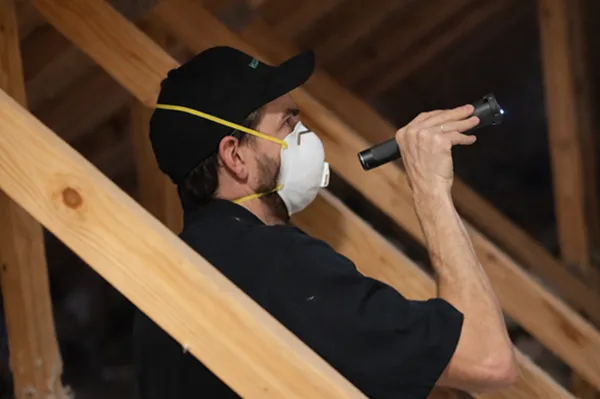
For a wind mitigation report, certain features — like roof-to-wall attachment — must be visually verified and documented.
If the inspector cannot access those areas, they cannot confirm the condition.
There are two common scenarios:
1. No attic access
If there is no attic access at all, this can often be corrected by installing an access hatch. Once access is available, the inspection can be completed properly.
2. Unsafe conditions
If the attic is too tight, too hot, or otherwise unsafe, the inspector may choose not to enter.
👉 Inspectors are not required to put themselves at risk
In these cases, one option is to have a contractor or roofer:
Access the area safely
Take the required photos
Provide documentation that can support the report
🧠 The real takeaway
Wind mitigation is not just about having upgrades — it’s about:
Proper installation
Full protection across all openings
Clear documentation
Verifiable conditions
👉 Small details — like one unprotected door or a missing label — can make a big difference in your insurance outcome
📞 Need help understanding your wind mitigation report?
Every property is different, and the rules can feel complex.
👉 We can help you understand what applies to your home and how to improve your position with the insurance company.
📞 Schedule your wind mitigation inspection
👉 Contact us today to schedule your inspection