
Wings and Live Termites — What to do Next?
🐜 I Found Wings and Live Termites in My House — What Should I Do Next?
Understanding Swarm Season vs Real Termite Infestation in Florida
One of the most common calls we receive during spring in Florida is:
👉 “I found wings and live termites in my house — do I have an infestation?”
The answer is: not necessarily.
Most people become very anxious when they suddenly see termite wings around windows, doors, kitchen counters, or light fixtures. But what many homeowners do not realize is that this can be completely normal during termite swarm season.
🌧️ What is termite swarm season?
In Florida, different species of termites swarm once a year, usually around the spring months — very commonly around May, sometimes a few weeks earlier or later depending on weather conditions and the species involved.
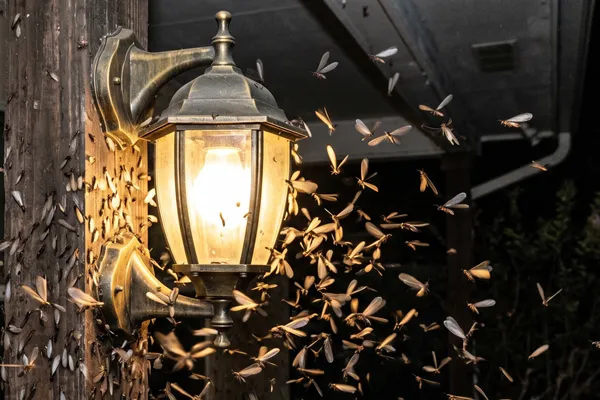
During this period, reproductive termites leave their colonies and fly in large numbers looking for new places to establish colonies.
Because termites are strongly attracted to light, it is extremely common to find them:
around windows
near doors
around kitchen lighting
near lamps
or close to illuminated areas at night.
After flying, they quickly lose their wings, which is why homeowners often suddenly discover:
piles of wings
crawling termites
or insects gathering near light sources.
This can look alarming, but in many situations it does not mean the home itself is infested.
👉 It may simply mean termites from outside were attracted by lighting and entered the home during swarm season.
⚠️ So when should you actually worry?
The key is understanding the difference between:
termites entering during swarm season,
and actual signs of active infestation inside the structure.
Finding wings alone is usually not enough to confirm that termites are damaging your home.
What matters is identifying evidence of ongoing activity.
🟤 Signs of subterranean termite activity
Subterranean termites are among the most aggressive termite species found in Florida.
One of the clearest signs of active subterranean termite infestation is the presence of mud tunnels or mud tubes.
These tunnels are extremely characteristic and are used by termites to travel while protecting themselves from exposure and dehydration.
They are commonly found:
on foundation walls,
garage walls,
crawl spaces,
structural elements,
or slab penetrations.
When these tunnels are broken open, termites are often visible crawling inside, moving quickly to repair the damaged area.
👉 This is a strong indication of active termite activity and should not be ignored.
If you identify mud tunnels, further evaluation and treatment are recommended asap!
🟠 Signs of drywood termite activity
Drywood termites behave very differently.
Unlike subterranean termites, they live directly inside the wood and tend to act much more slowly. The most common indication of drywood termite activity is the presence of termite frass, also called termite pellets.
These small pellets are composed of compressed wood fibers and are often found:
below attic framing,
near windows,
under soffits,
around fascia,
or beneath infested wood components.
One important sign is recurrence.
If you clean the pellets and new pellets continue appearing, that usually indicates ongoing activity inside the wood.
Drywood termites are very common in Florida, especially in attic areas and roof structures. In many cases, the activity is localized and develops slowly over time.
Based on our experience, most drywood termite situations are not major structural concerns, but proper evaluation is still important to understand the extent and reduce risk of progression.
🪵 Wood damage is another important clue
For both subterranean and drywood termites, visible wood damage can also indicate activity.
This may include:
hollow wood,
blistering surfaces,
weakened trim,
damaged fascia,
or deteriorated structural elements.
However, termite damage can sometimes remain hidden for long periods inside walls, attics, or structural framing.
That’s why identifying the type of activity is important before jumping to conclusions.
🧠 The most important takeaway
Finding wings during swarm season does not automatically mean your home has termites.
Very often, it simply means termites from outside were attracted to lights and entered temporarily through an open door, garage, or window.
What truly matters is whether there are signs of:
mud tunnels,
termite pellets,
recurring frass,
or wood damage.
Those conditions are much more indicative of actual infestation.
🛡️ What should you do if you find wings or termites?
If you are unsure whether what you found represents normal swarm activity or a real infestation, the best next step is a proper WDO (Wood Destroying Organism) inspection.
In many cases, preventive treatment may also be worth considering, especially in Florida where termite pressure is extremely high.
Preventive liquid and spray treatments can help reduce risk and create long-term protection for vulnerable wood areas before significant infestation develops.
📍 Termite Treatment in Broward
We provide licensed termite (WDO) treatment, including:
Fort Lauderdale & Wilton Manors
Hollywood & Dania Beach
Hallandale Beach & Aventura
Pembroke Pines & Miramar
Weston & Parkland
Davie & Southwest Ranches
Cooper City & Plantation
Sunrise & Tamarac
Coral Springs & Coconut Creek
Lighthouse Point & Lauderdale-by-the-Sea
Margate & North Lauderdale
Deerfield Beach & Pompano Beach
📍 Termite inspections in Orlando and surrounding areas
We provide licensed termite (WDO) inspections throughout Central Florida, including:
Kissimmee & ChampionsGate
St. Cloud & Davenport
Lake Mary & Sanford
Oviedo & Waterford Lakes
The Villages & Leesburg
Clermont & Minneola
Mount Dora & Eustis
Winter Garden & Celebration
Winter Park & Maitland
Altamonte Springs & Longwood
❓ Frequently Asked Questions
Do termite wings always mean infestation?
No. During swarm season, termites are often attracted to lights and may enter homes temporarily without establishing an infestation.
What are mud tunnels?
Mud tunnels are protective pathways created by subterranean termites and are one of the clearest signs of active infestation.
What is termite frass?
Frass is the pellet-like material drywood termites leave behind after consuming wood. Recurring frass is often a sign of ongoing activity.
Should I treat my home even if I only found wings?
Not necessarily, but preventive treatment may still be a good idea in Florida due to the high level of termite activity throughout the region.
📞 Schedule a termite inspection
If you found termite wings, pellets, mud tunnels, or signs of wood damage, we can help you better understand what is happening and whether treatment may be necessary.
✔ Licensed WDO inspections
✔ Clear explanations and guidance
✔ Preventive and active infestation evaluation
👉 Contact us today to schedule your inspection.