
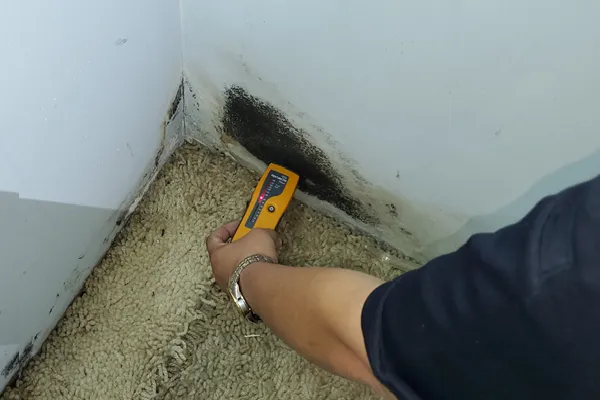
Mold Questions Most People Don’t Fully Understand
🦠 Mold Assessment & Testing - Mold Questions Most People Don’t Fully Understand
🌿 If mold exists everywhere in nature, why should I worry about mold inside a house?
Yes, mold exists naturally outdoors. Mold spores are present in soil, vegetation, and outdoor air. But the important difference is concentration.
Outside, spores disperse into a large open environment. Indoors, especially when there is a hidden moisture source, mold spores can accumulate in a confined space and reach much higher concentrations.
A good comparison is car exhaust.
If a car drives by you outside, the exhaust disperses quickly. But if you sit inside a closed garage with the car running, the concentration builds to dangerous levels because there is nowhere for it to go.
The same principle applies to mold exposure inside a home.
🧫 Are all molds the same?
No. Different molds behave differently and may affect people differently depending on type, concentration, and individual sensitivity.
Some molds are associated with outdoor vegetation and natural environments. Others develop indoors when moisture damage exists.
For example, Penicillium and Aspergillus are commonly associated with water intrusion and humidity problems. These molds may trigger respiratory symptoms, irritation, and allergic reactions.
“Black mold,” often referring to Stachybotrys-type mold, behaves differently and is typically associated with prolonged moisture exposure and saturated materials like drywall.
This is why proper testing matters. Understanding the type and concentration provides much more meaningful information than simply confirming presence.
🧪 Is a swab sample enough?
Usually not.
A swab sample only confirms whether mold exists on a specific surface. It does not tell you whether mold levels in the air are elevated or how much exposure may exist inside the home.
What affects indoor air quality is not simply whether mold is present somewhere on a surface — it is the concentration of airborne spores people are breathing over time.
That is why air sampling is often much more useful in understanding the overall indoor environment.
📋 What does a proper mold assessment typically include?
A proper mold assessment usually includes:
Indoor air samples
Outdoor comparison samples
Moisture evaluation
Surface sampling when appropriate
The outdoor sample is critical because it helps determine whether the mold levels inside the home are simply reflecting normal outdoor conditions or whether the home itself is generating elevated mold concentrations.
That comparison provides a much clearer picture of what is actually happening.
🛠️ Can anyone fix mold damage?
Not always.
Small, limited areas may sometimes be handled safely with minor cleaning. However, once contamination becomes larger — especially beyond roughly 10 square feet — professional remediation is required.
The biggest concern is not only the visible mold itself.
When drywall or contaminated materials are opened improperly, mold spores can spread throughout the home and settle on:
Carpets
Furniture
HVAC systems
Clothing and personal belongings
That is why proper containment procedures matter.
🏗️ What does proper mold remediation involve?
Professional remediation is designed to contain the area and remove contamination safely. A proper process may include:
Plastic containment barriers
HEPA filtration
Removal of contaminated materials
Treatment of structural components when needed
The goal is to prevent mold spores from spreading while addressing the moisture source that allowed mold growth in the first place, before replacing damaged drywall, baseboards, and other materials high in cellulose content.
⚖️ What’s the difference between killing mold and removing mold?
This is one of the most misunderstood topics in mold remediation.
Even dead mold spores can still affect indoor air quality because the spores themselves remain present.
What matters is not simply whether the mold is alive. What matters is whether the spores and contaminated materials remain in the environment.
That is why proper remediation focuses on:
Removing contaminated materials
Improving air filters on A/C
Controlling moisture
Reducing airborne spore exposure
not simply “killing” mold with chemicals. Dead mold spores associated with biocides have the same effect in your body as live mold spores. Actually, worse, now you have added chemicals.
🌬️ What actually helps reduce mold exposure inside a home?
The most effective strategies focus on controlling moisture and improving filtration.
This includes:
Fixing leaks quickly
Controlling indoor humidity - keeping ac on on in lower temperatures and using moisture meetes and needed.
Using quality HVAC filters (such as MERV 8–13)
Replacing filters regularly
Maintaining proper airflow in all areas (especially in poorly ventilated closets)
The goal is to reduce the conditions that allow mold growth and limit spore circulation inside the home.
💧 What is the most important part of mold repair?
Everything starts with identifying the moisture source.
Mold cannot continue growing without moisture.
That means the first step is always understanding:
👉 Where is the water coming from?
Once the source is identified and corrected, then damaged materials can be repaired or replaced appropriately.
If the moisture source is not corrected, the mold condition is likely to return.
⚠️ Where is mold most concerning?
Mold becomes more concerning when it affects porous materials such as drywall.
Drywall holds moisture internally and contains organic material that supports mold growth. Because of that, mold can spread behind the visible surface without being immediately obvious.
On hard surfaces such as tile, stone, or bathtubs, mold growth is typically more limited and easier to manage because the material itself does not support deeper contamination the same way porous materials do.
💡 Are UV or Blue Lights a Good Solution for Mold?
A lot of companies promote UV or blue lights as a solution for mold problems inside homes and air conditioning systems. While these systems can help reduce certain types of bacteria, they are often misunderstood when it comes to mold.
The important thing to understand is that mold-related health concerns are not based only on whether the mold spores are alive. The concern comes from the chemical composition and structure of the mold spores themselves. Even when mold spores are dead or dormant, they can still affect indoor air quality and trigger respiratory irritation, allergies, or sensitivity reactions.
UV lights may deactivate or kill some mold spores, but they do not remove those spores from the environment. The particles are still present in the air and on surfaces, and people can still inhale them. That is why killing mold is not the same as removing mold.
The most effective long-term approach is to control moisture, improve filtration, and reduce airborne particles inside the home. One of the best practical steps is using high-quality HVAC filters and replacing them frequently. In most residential applications, filters rated between MERV 8 and MERV 13 provide a good balance between filtration performance and airflow. Replacing filters every one to two months helps reduce airborne dust, mold spores, and other contaminants circulating through the house.
👉 The real solution is not trying to “kill” mold spores in the air. The real solution is reducing moisture, removing contamination properly, and improving filtration to reduce exposure over time.
📍 Mold assessment and testing in Orlando and surrounding areas
We provide mold assessment and testing throughout Central Florida, including:
Orlando
Clermont
Winter Garden
Winter Park
Kissimmee
The Villages
Horizon West
Altamonte Springs
Oviedo
📞 Need guidance on mold testing or remediation?
Every property and every situation is different.
If you are unsure whether mold testing is necessary or want help understanding what conditions may justify further evaluation, we can help guide you through the process in a practical and informed way.