
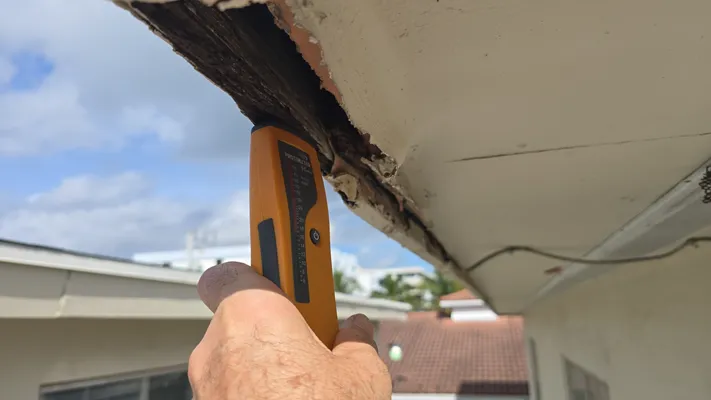
Should the Inspector Have Caught That?
🏠 “Should the Inspector Have Caught That?”
Understanding the Real Scope — and Limitations — of a Home Inspection
One of the most common reactions buyers have after moving into a home is discovering an unexpected issue and immediately wondering:
👉 “Should the inspector have caught this?”
That question is completely understandable.
A home inspection is one of the most important parts of the buying process, and buyers naturally expect it to protect them from major surprises. In many situations, a good inspection does exactly that — identifying significant concerns, safety hazards, moisture issues, roofing defects, plumbing problems, electrical deficiencies, and many other important conditions before closing.
But it is also important to understand what a home inspection is actually designed to do.
A standard home inspection is a visual assessment of the property at the time of the inspection. The inspector evaluates major systems and components that are visible and readily accessible during that moment.
It is not:
a warranty,
a guarantee against future failures,
a destructive investigation,
or a prediction of every hidden issue that may exist behind walls, under floors, or inside inaccessible areas.
Understanding those limitations helps buyers develop more realistic expectations about what inspections can and cannot accomplish.
🚿 “The water heater works… but we don’t have enough hot water”
This is one of the most common complaints homeowners experience after moving in.
During the inspection, the water heater may have produced hot water properly. The inspector verified that the system was operational and capable of heating water to a reasonably warm temperature.
But after moving into the home, the buyers realize:
the hot water runs out too quickly,
temperatures are lower than expected,
or the system struggles during simultaneous use.
Naturally, they wonder why the inspector did not identify the problem.
The reason is because there is an important difference between:
verifying operation,
and determining adequacy.
A home inspection generally verifies whether a system is functioning at the time of the inspection. Determining whether the system is perfectly adequate for a homeowner’s lifestyle, preferences, or occupancy demands is a different type of evaluation.
For example:
Is the water heater large enough for a family of six?
Can it support multiple showers at the same time?
Is the recovery rate fast enough for the owner’s expectations?
Those questions involve usage patterns and performance expectations that vary significantly from one homeowner to another.
The same principle applies to air conditioning systems.
An inspector may verify that the AC is cooling properly during the inspection, but determining whether the system has perfect capacity for every weather condition or every occupancy scenario is generally outside the scope of a standard home inspection.
Most experienced inspectors will still make practical observations and compare equipment size with the property, but exact adequacy calculations are not typically part of the evaluation.
❄️ “The AC worked during the inspection — now it failed after we moved in”
This is another extremely common situation.
A system may operate normally during the inspection and fail days or weeks later after the buyers move into the property.
Buyers sometimes assume this means the inspector missed a defect.
But a home inspection is an assessment of conditions present at the time of the inspection — not a guarantee of future performance.
Mechanical systems can fail unexpectedly even when they appear functional during testing. This includes:
air conditioners,
water heaters,
appliances,
garage door operators,
disposals,
and many other components.
The reality is that homes require ongoing maintenance, repairs, and eventual replacement of aging systems over time.
A useful rule many homeowners follow is budgeting approximately 1% of the property value annually for maintenance and repairs.
For example:
a $500,000 home may reasonably require around $5,000 annually in maintenance over the long term.
Many buyers, especially first-time homeowners, underestimate how much maintenance is involved with owning a property.
That does not mean the inspection failed. It simply means homes are dynamic systems where components continue aging and wearing after the inspection occurs.
🚰 “The shutoff valve broke after we touched it”
This is another area where misunderstandings occasionally happen.
Inspectors generally avoid extensively operating shutoff valves or manipulating components with a high risk of failure, especially older plumbing valves that may already be weakened by age, corrosion, or mineral buildup.
Similarly, home inspectors typically do not:
ignite gas pilots,
dismantle equipment,
remove fixtures,
open walls,
or perform invasive testing procedures.
The inspection is designed to remain non-destructive because the property still belongs to the seller during the transaction process. Altering or damaging systems during the inspection would create unnecessary liability and risk.
That is one reason why the standards of practice specifically limit certain types of testing.
🧱 “We found mold behind the dishwasher after moving in”
This situation can be especially frustrating because buyers often feel the issue should have been obvious. But hidden leaks behind appliances are one of the clearest examples of the visual limitations associated with home inspections.
Inspectors do not:
move heavy appliances,
remove cabinets,
dismantle dishwashers,
or open finished walls.
If a leak exists entirely behind cabinetry or inside concealed spaces, it may not be visible during the inspection.
This is also without mold testing; the presence or absence of mold can not be confirmed.
Even when moisture damage is hidden behind walls or appliances, elevated mold spores captured through air sampling may indicate abnormal environmental conditions that deserve further investigation.
A mold test cannot “see through walls” either, but it can sometimes help identify hidden moisture-related concerns that are not visually apparent during the inspection.
🐜 “We remodeled later and discovered termites inside the wall”
This is another common misunderstanding after buyers begin remodeling projects.
Home inspectors do not perform destructive testing. They do not:
remove drywall,
dismantle finishes,
cut openings,
or damage the structure to investigate concealed areas.
If termite activity exists entirely inside a closed wall cavity with no visible external evidence, it may not be discoverable during a standard inspection.
This is especially important because in many states, termites are specifically excluded from the scope of a general home inspection unless a separate WDO inspection is performed by a properly licensed professional.
That distinction often creates confusion for buyers who assume termites are automatically included in every inspection.
A standard home inspection may identify suspicious signs, but a licensed termite inspection is specifically designed to evaluate wood-destroying organisms more directly. It is not part of a standard home inspection the WDO inspection.
🔍 Why inspections still provide enormous value
Understanding inspection limitations does not reduce the importance of the inspection.
In reality, home inspections still provide tremendous value because they evaluate hundreds of visible conditions throughout the property and help buyers better understand:
major repair concerns,
safety issues,
moisture conditions,
roofing problems,
electrical hazards,
plumbing deficiencies,
HVAC evaluation,
and many other important observations.
In many situations, inspections help buyers avoid extremely expensive surprises and negotiate important repairs before closing.
But no inspection can guarantee that a home contains absolutely no hidden defects.
That would require destructive investigation, opening walls, dismantling systems, and essentially taking portions of the property apart — something that is simply not practical during a real estate transaction.
🧠 The real takeaway
A home inspection is an extremely valuable tool, but it is important to understand what it is designed to accomplish.
It is:
a visual assessment,
of visible and readily accessible conditions,
at the time of the inspection.
It does not:
predict future failures,
determine perfect adequacy for every homeowner,
eliminate all risk,
or uncover every hidden defect concealed behind finished surfaces.
The purpose of the inspection is to help buyers make more informed decisions by identifying significant visible concerns before purchasing the property.
And while inspections are not perfect, skipping the inspection entirely dramatically increases the likelihood of unexpected problems after move-in.
📍 Home inspections throughout Central Florida
We provide home inspections throughout Central Florida, including:
Kissimmee & ChampionsGate
St. Cloud & Davenport
Lake Mary & Sanford
Oviedo & Waterford Lakes
The Villages & Leesburg
Clermont & Minneola
Mount Dora & Eustis
Winter Garden & Celebration
Winter Park & Maitland
Altamonte Springs & Longwood
❓ Frequently Asked Questions
Can a home inspection predict future failures?
No. A home inspection evaluates conditions present at the time of the inspection but cannot predict exactly when equipment may fail later.
Can inspectors see behind walls?
No. Standard inspections are non-destructive and limited to visible and readily accessible areas.
Does a home inspection determine whether systems are adequate?
Not necessarily. Inspectors verify operation, but adequacy depends on usage, occupancy, and homeowner expectations.
Should I still get a home inspection?
Absolutely. Even with limitations, inspections remain one of the best tools available to help buyers reduce risk and better understand the condition of a property before purchase.
📞 Schedule your inspection
A good inspection cannot eliminate all risk — but it can provide valuable information, identify significant visible concerns, and help buyers move forward with greater confidence.
✔ Clear reporting
✔ Organized findings
✔ Infrared-enhanced evaluations
✔ AI-assisted documentation and reporting
👉 Contact us today to schedule your inspection.