
Is Included Infrared Just Marketing?
Thermal Imaging in Home Inspections: Included or Extra?
🌡️ Infrared Home Inspection in Orlando
You’ll hear it all the time:
👉 “We include infrared in our home inspection.”
It sounds like a strong advantage. It sounds like you’re getting more value.
But in many cases, it doesn’t mean what people think it means.
The reality is that infrared imaging is one of the most misunderstood tools in the home inspection industry. When used correctly, it can provide valuable insight. When used incorrectly, it can create confusion, missed issues, or unnecessary concern.
⚠️ Infrared is powerful — but not simple
Infrared (thermal imaging) is not a plug-and-play tool.
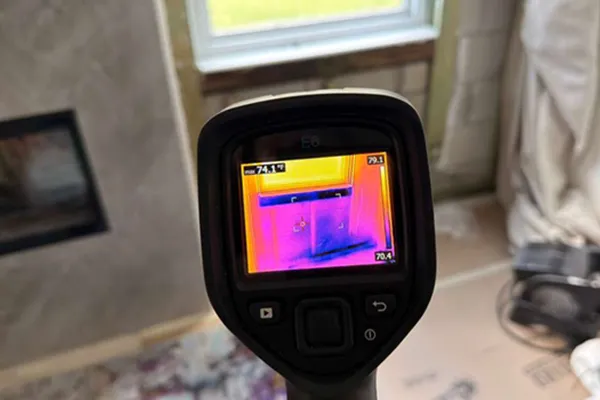
It does not “see” water. It does not directly detect leaks. What it actually detects are temperature differences across surfaces. Those patterns then need to be interpreted based on building conditions, materials, and environmental factors.
That interpretation is where experience matters.
Without proper training, it’s very easy to:
Identify a cold spot and assume it’s a leak when it’s not
Miss a real issue because conditions don’t allow it to show clearly
Misread patterns that have nothing to do with moisture
This is why infrared is not just about having a camera — it’s about knowing how to read what the camera is showing.
🎓 What should you ask your inspector?
A simple but important question is:
👉 Is your inspector a Certified Residential Thermographer (CRT)?
That certification reflects formal training in thermal imaging and building science. Without it, the risk of misinterpretation increases significantly.
Infrared imaging can add value to an inspection, but only when it is used by someone who understands both the technology and the structure being evaluated.
⚠️ Why false positives and missed issues are common
In real-world inspections, conditions are not always ideal.
A thermal image can be influenced by:
Weather conditions
Time of day
Recent use of water or HVAC systems
Construction materials
Because of this, a cold or warm pattern does not automatically mean there is a defect.
Without proper interpretation, this can lead to:
Unnecessary concern over conditions that are not defects
Missed issues that require a different inspection method
Decisions based on incomplete or misleading information
That’s why infrared should always be treated as a supporting diagnostic tool, not a standalone answer.
📷 Not all infrared cameras are the same
Another major difference in quality comes from the equipment itself.
Many inspectors use low-cost cameras in the $300–$400 range. These devices often have:
Low resolution
Limited sensitivity
Reduced ability to detect subtle temperature differences
In practice, this means they may not capture the level of detail needed to identify meaningful patterns.
Professional-grade cameras, such as those from FLIR, provide higher resolution and more reliable data. These are the types of tools typically used in professional inspections and building diagnostics.
🔬 What proper infrared inspection actually requires
A reliable infrared evaluation comes down to two things: training and equipment.
Training includes understanding:
How buildings respond to moisture and temperature
How to interpret patterns correctly
When infrared is useful — and when it is not
Equipment includes using cameras capable of capturing accurate and usable thermal data. Without both, infrared becomes more of a marketing feature than a meaningful inspection tool.
🏆 Experience matters
At HouseMaster, infrared is used as part of a broader inspection approach — not as a standalone feature.
Our team includes Certified Residential Thermographers, and the process is supported by advanced training and real field experience.
The work is led by Cesar Costa, a Level II thermographer with experience working alongside engineers in building evaluations and recertifications. That level of experience brings a different perspective to how thermal imaging is used in residential inspections.
🔍 What infrared can actually help identify
When used correctly, infrared can help detect conditions such as:
Hidden moisture intrusion
Insulation deficiencies
Air leaks and energy loss
Electrical overheating
Roof or ceiling leaks
It is important to understand that infrared provides indications, not final conclusions. It helps guide further evaluation and supports findings from the inspection.
🌡️ Infrared vs Moisture Meter vs Visual Inspection — What’s the Difference?
These three methods are often used together, but they serve very different purposes. A visual inspection is always the starting point, identifying signs like stains, damage, or conditions that suggest moisture may be present. Infrared imaging then helps detect temperature differences that may indicate hidden moisture or air leaks — but it does not confirm the presence of water. A moisture meter is used to verify conditions by measuring the actual moisture content in materials. In practice, the best results come from combining all three: visual to identify concerns, infrared to guide where to look deeper, and a moisture meter to confirm findings and reduce risk of misinterpretation.
⚖️ Should infrared be included in your inspection?
The answer depends on how it is used.
In many inspections, infrared is used in a limited way to help investigate specific concerns or support visual findings. This can be helpful, but it is not the same as a full thermal evaluation.
A full infrared scan involves more time, more analysis, and a more systematic review of the home, including walls, ceilings, and key structural areas.
Because of that additional effort, it is typically offered as an add-on service.
At HouseMaster, this type of upgrade is usually available at a relatively low cost, especially when compared to the value of identifying hidden conditions early.
🧠 When is a full infrared scan worth considering?
A more detailed infrared evaluation can be valuable in situations such as:
Suspected or past moisture issues
Older homes where conditions are less predictable
Energy efficiency concerns, including air leakage and insulation gaps
Situations where a deeper level of evaluation is desired
In these cases, infrared can provide additional insight that may not be visible during a standard inspection.
⚠️ The real takeaway
Not all infrared inspections are the same.
The value does not come from simply having a camera. It comes from:
The training of the person using it
The quality of the equipment
The ability to interpret findings correctly
Knowing when infrared adds value — and when it does not
Infrared should be used as a tool to support the inspection, not as a marketing claim.
📍 Infrared inspections in Orlando and surrounding areas
We provide infrared-enhanced inspections throughout Central Florida, including:
Orlando
Clermont
Winter Garden
Winter Park
Kissimmee
The Villages
Horizon West
Altamonte Springs
Oviedo
Windermere and Maitland
❓ Frequently Asked Questions
Is infrared included in a home inspection?
Sometimes, but often in a limited way. It is important to understand how it is actually being used and whether a full evaluation is included.
Can infrared detect all leaks?
No. It detects temperature differences, not water directly. It provides a good indication of areas that may require further evaluation.
Is infrared worth it?
Yes, when used by trained professionals with proper equipment and as part of a broader inspection strategy.
How much does a full infrared scan cost?
It is typically a relatively small add-on compared to the value it can provide in identifying hidden conditions. It can usually add from $50 to $175
📞 Schedule your infrared-enhanced inspection in Orlando
Infrared can be a valuable tool — when used the right way.
✔ Certified thermography
✔ Professional-grade equipment
✔ Clear, practical interpretation
👉 Contact us today to schedule your inspection