
Can Home Inspectors Use Drones?
Can Home Inspectors Use Drones During a Home Inspection?
What Is Legal, What Is Risky, and What Buyers Should Ask
Drones have become very common in home inspections, and for good reason.
They can help inspectors see areas of the roof that may be difficult, unsafe, or impractical to access by ladder. They can provide useful photos and videos of steep roofs, tile roofs, high roof sections, chimneys, valleys, flashing areas, gutters, and other exterior components that may not be visible from the ground.
For many homes in Orlando and Central Florida, drone-assisted roof inspections can improve safety, reduce the need to walk fragile roofing materials, and provide better documentation for the buyer.
But there is one important point many people do not realize:
Drone use during a home inspection is regulated.
If a drone is being used as part of a paid inspection, to document a property, or to support a real estate transaction, it is generally considered non-recreational or commercial use. In the United States, that means FAA rules apply.
Is It Legal for a Home Inspector to Fly a Drone?
Yes — home inspectors can use drones during inspections, but the operator must follow FAA rules.
The Federal Aviation Administration regulates drone operations in the United States. For non-recreational or business-related drone use, the FAA generally requires the operator to follow Part 107 requirements and hold a Remote Pilot Certificate. The FAA describes Part 107 as the rule that enables certificated remote pilots to fly drones for work or business, and says almost all non-recreational drone flying is regulated by Part 107.
That means if a drone is being used as part of a paid home inspection, roof inspection, real estate transaction, commercial inspection, or property documentation service, the inspector should be operating under the proper FAA framework.
This is not just a technicality. It relates to safety, liability, airspace rules, and professional accountability.
Recreational vs. Commercial Drone Use
This is where many people get confused.
Flying a drone for fun is recreational use. Flying a drone to support a business service is different.
If a drone is being used as part of a home inspection, even for a quick roof photo, it is not just a hobby flight. It is being used to support a paid professional service.
That distinction matters because the rules are different.
Recreational flyers have their own rules, including TRUST testing and registration requirements depending on weight. But for business or non-recreational use, the FAA directs operators toward Part 107 compliance. The FAA’s “Getting Started” guidance states that if someone flies for commercial, government, or any other non-recreational purpose, they must learn the regulations for certificated remote pilots, become a certificated remote pilot, and register applicable drones through FAA DroneZone.
For buyers and agents, the practical question is simple:
Is the person flying the drone licensed to use it commercially?
What About Small Drones Under 249 Grams?
You may hear inspectors say: “It’s under 249 grams, so it does not need a license.” That statement is often misunderstood.
Drone weight can affect certain registration requirements, especially for recreational use. The FAA notes that recreational flyers must register drones weighing 250 grams or more.
But that does not mean a small drone can automatically be used for paid inspections without following commercial rules. The key factor is not only the weight of the drone. The key factor is the purpose of the flight.
If the drone is being used for work, business, inspection documentation, or a real estate transaction, it is not recreational. Under FAA guidance, non-recreational drone use is generally governed by Part 107.
So a lightweight drone can still require commercial compliance when it is being used as part of a professional inspection.
What Happens in the Real World?
In the inspection industry, drone use has grown quickly. Many inspectors now carry small drones because they are convenient, affordable, and useful.
The concern is that some inspectors may treat drone use casually, especially when using small drones for quick roof photos. They may assume that because the drone is lightweight, the flight is short, or the roof is close, the rules do not matter. That can create unnecessary risk.
A professional inspection company should not approach drone use as a shortcut. If drones are part of the service, the company should understand the rules, airspace limitations, safety requirements, and documentation responsibilities.
The goal is not just to get a few pictures. The goal is to use the right tool the right way.
When Are Drones Useful During a Home Inspection?
Drones are especially useful when roof access is limited or unsafe.
This can happen with steep roofs, tall homes, tile roofs, fragile roofing materials, wet surfaces, limited ladder access, townhouse rooflines, multi-story properties, and roof sections that are difficult to see from the ground.
In Florida, tile roofs are a major example. Walking clay roofs can damage tiles, especially if the roof is older, fragile, or poorly supported. In those situations, drone documentation can provide valuable visibility while reducing the risk of causing damage.
Drones can also help document overall roof condition, roof covering defects, damaged tiles or shingles, debris, gutters, flashing areas, roof penetrations, chimneys, and other visible exterior conditions.
However, drone inspections also have limitations.
A drone can provide excellent visual documentation, but it does not replace every part of a physical roof evaluation. It cannot feel soft decking, lift materials, or verify certain conditions by touch. Like infrared, a drone is a tool — not a complete inspection by itself.
The best approach is to use drone documentation when it adds value and combine it with traditional inspection methods when safe and appropriate.
Drone Inspection vs. Walking the Roof
A drone-assisted inspection and a traditional roof inspection are not exactly the same thing.
Walking a roof may allow closer physical evaluation, but it may also create safety concerns or risk damage to the roof covering. Drone documentation can improve safety and provide excellent visual coverage, but it remains a visual inspection from the air.
That is why the inspector’s judgment matters.
In some cases, walking the roof may be appropriate. In other cases, the safer and more responsible choice may be to use a drone, binoculars, ladder-edge observation, or a combination of methods.
The goal is not to force one method every time. The goal is to choose the safest and most effective method for the specific property.
What Should Buyers Ask Their Inspector?
Before hiring an inspector, buyers and agents should ask a simple question:
“Are you licensed to fly a drone commercially?”
That question can reveal a lot.
If the inspector uses drones as part of a paid inspection, they should be able to explain how they comply with FAA requirements. They should also understand where they can fly, when authorization may be needed, and how drone limitations affect the inspection.
Buyers can also ask whether drone photos or videos will be included in the report and how those findings are documented.
A drone should not be used just because it looks impressive. It should support better inspection documentation and help the buyer understand areas that are difficult to see otherwise.
How HouseMaster Handles Drone-Assisted Inspections
At HouseMaster, drones are used where they add real value to the inspection.
We use drone documentation for roof areas and exterior components when access is limited, unsafe, or when aerial photos can improve the buyer’s understanding of the property.
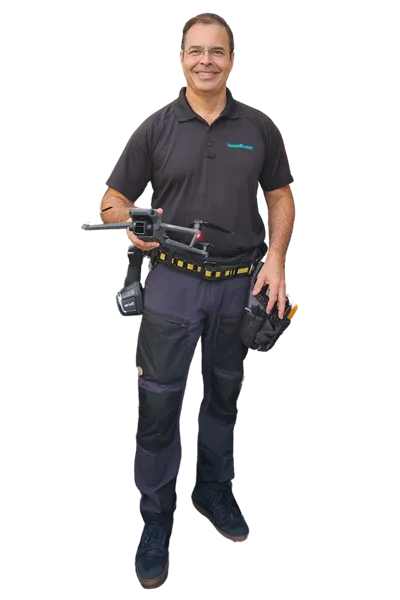
Our team is led by Cesar Costa, who holds an FAA Part 107 Remote Pilot Certificate and has experience using drones for residential and commercial inspection applications. This is especially important for commercial inspections, multi-story buildings, complex roof systems, and situations where compliance and documentation matter.
We do not view drones as a gimmick. We view them as one of several professional inspection tools that may help improve visibility, safety, and reporting quality when used correctly.
Why Drone Licensing Matters
Drone licensing matters because it reflects a higher level of professional responsibility.
A licensed drone operator is expected to understand airspace rules, operational limits, weather conditions, flight safety, people and property concerns, and FAA requirements. Part 107 operators also need to register drones used for commercial operations. The FAA notes that anyone flying under Part 107 must register each drone they intend to operate.
For buyers, this means the inspection company is taking drone use seriously.
For agents, it reduces the risk of referring a company that may be using drones without understanding the rules.
For property owners, it helps ensure drone use is performed with safety and professionalism in mind.
The Real Takeaway
Drones can be a valuable tool during a home inspection, especially when roof access is limited, unsafe, or likely to damage the roof covering.
But drone use is not just about owning a drone.
When a drone is used for a paid inspection or real estate-related service, FAA rules apply. Buyers and agents should ask whether the inspector is certified to fly commercially and whether drone documentation will be used appropriately in the report.
At HouseMaster, we use drones as part of a broader inspection process — combining professional tools, training, licensing, and clear reporting to help buyers better understand the property.
Drone-Assisted Inspections in Orlando and Central Florida
HouseMaster provides drone-assisted inspections throughout Orlando and Central Florida, including:
Kissimmee & ChampionsGate
St. Cloud & Davenport
Clermont & Minneola
Winter Garden & Celebration
Winter Park & Maitland
Lake Mary & Sanford
Oviedo & Waterford Lakes
The Villages & Leesburg
Altamonte Springs & Longwood
Drone documentation can be especially valuable in communities with tile roofs, multi-story homes, townhouse rooflines, steep roofs, and complex roof designs.
Frequently Asked Questions
Can a home inspector legally use a drone?
Yes, but if the drone is used as part of a paid inspection or business service, the operator generally needs to comply with FAA Part 107 requirements.
Does a drone under 249 grams require a license?
A lightweight drone may have different registration requirements for recreational use, but if it is used for business or inspection purposes, the flight is generally considered non-recreational and Part 107 rules apply.
Does a drone replace walking the roof?
Not always. A drone is a visual documentation tool. It can improve roof visibility and reduce safety risks, but it does not replace every aspect of a physical roof evaluation when walking the roof is safe and appropriate.
When is drone inspection most useful?
Drone documentation is useful for steep roofs, high roofs, tile roofs, fragile materials, limited access areas, townhouse roofs, and situations where climbing may be unsafe or may damage the roof covering.
Should I ask my inspector if they are FAA certified?
Yes. If drone use is included in the inspection, buyers and agents should ask whether the operator holds an FAA Part 107 Remote Pilot Certificate.
Schedule Your Drone-Assisted Home Inspection
Drones can improve roof visibility and documentation — but only when they are used the right way.
If you are buying a home in Orlando or Central Florida, schedule your inspection with HouseMaster for professional tools, licensed drone use when required, and clear reporting designed to help you make better decisions.
Call 407-343-4677 or book online.