
Home Inspection for New Construction?
🏗️ Do You Need a Home Inspection for New Construction?
The 3 Most Important Inspections for a Newly Built Home
One of the biggest misconceptions in real estate is the idea that a newly built home does not need an inspection.
A lot of buyers assume:
👉 “It’s brand new, so everything should be perfect.”
But the reality is very different.
Modern construction moves extremely fast, and most builders rely on large networks of subcontractors to complete different phases of the project. One company may handle framing, another electrical, another HVAC, another drywall, another roofing, and many of those subcontractors subcontract portions of the work again to smaller crews.
With so many people involved at different stages under tight schedules, it becomes very easy for details to be overlooked.
That does not necessarily mean the builder is bad. It simply means construction is complex, and mistakes can happen — even on expensive homes and even with reputable builders.
That is why independent new construction inspections can provide tremendous value. A neutral third party focused entirely on evaluating the property can often identify issues before they become long-term homeowner problems.
In our experience, there are three inspections that provide the greatest benefit during the construction process.
🔨 1. The Pre-Drywall Inspection
One of the most valuable inspections you can do
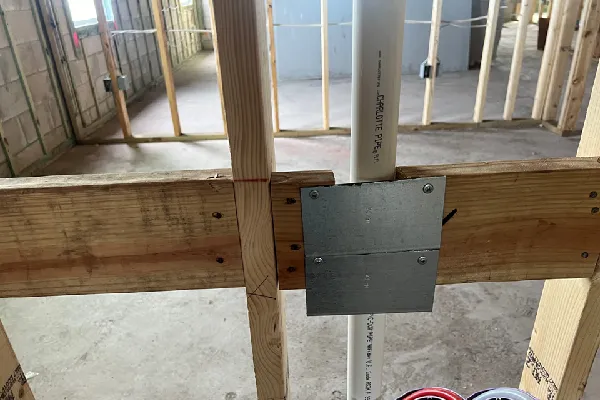
The pre-drywall inspection happens before insulation and drywall are installed, while the structure and major systems remain fully visible.
This stage is incredibly important because once drywall is installed, many defects become hidden permanently behind finished walls and ceilings.
During pre-drywall inspections, we commonly identify conditions such as cracked framing members, improperly drilled structural components, missing protection plates for wiring, loose fastening, unsupported piping, and installation deficiencies that may not become visible again after construction is complete.
HVAC ductwork is another area where problems are frequently discovered. We often find ducts that are bent, compressed, poorly supported, or improperly connected. Those conditions can later contribute to airflow problems, poor cooling performance, uneven temperatures, or excessive strain on the air conditioning system.
Window installation details are also extremely important during this phase. Improper sealing or flashing may not create visible problems immediately, but over time these deficiencies can contribute to moisture intrusion, hidden leaks, or mold growth inside wall cavities.
One of the biggest advantages of the pre-drywall inspection is that corrections are usually much easier and less expensive while the structure is still open.
Once drywall, paint, cabinets, and finishes are installed, repairing hidden defects becomes significantly more difficult and disruptive.
This inspection is essentially the buyer’s best opportunity to evaluate what is happening behind the walls before everything becomes concealed.
🔵 2. The Blue Tape Inspection
The final walkthrough before closing
The second important phase is commonly called the “blue tape inspection.”
This is the final walkthrough before closing, where buyers and builders typically identify cosmetic defects and incomplete items before the property is transferred to the new owner.
Most people associate the blue tape walkthrough with paint touch-ups and cosmetic concerns, but a professional inspection at this stage can provide much deeper value.
At this point, all systems are operational, appliances are installed, and the home is essentially functioning as a completed property. That allows inspectors to evaluate how systems are actually performing together under real-world conditions.
During these inspections, we frequently identify issues such as GFCI outlets that do not trip properly, loose breakers inside electrical panels, disconnected dryer vents, improperly terminated bathroom exhaust ducts, missing insulation in attic areas, grading concerns, gutter alignment problems, and moisture-related conditions that are not yet visible to the homeowner.
In one property, a sewer scope inspection identified significant amounts of sand and construction debris inside the drain piping. Left undiscovered, that issue could have caused major plumbing problems after move-in.
In another case, improper mortar installation on a tile roof created significant efflorescence and appearance concerns that later became part of a dispute with the builder.
We have also identified irrigation systems spraying directly against poorly sealed exterior walls, creating moisture intrusion that was only detectable through infrared imaging before visible damage appeared inside the home.
The blue tape inspection provides an important final layer of quality control before closing, helping buyers identify both cosmetic and functional concerns while the builder is still responsible for corrections.
🛡️ 3. The 11th-Month Warranty Inspection
The inspection you should never skip
If there is one inspection we strongly recommend homeowners never skip, it is the 11th-month warranty inspection.
Most builders provide a one-year warranty covering many construction-related defects. The 11th-month inspection occurs near the end of that warranty period, typically around months 10 or 11, giving homeowners one final opportunity to identify issues before warranty coverage expires.
This timing is extremely valuable because it allows enough time for defects to begin developing under real-world conditions.
During the first year of occupancy, the home experiences:
seasonal temperature changes,
moisture exposure,
structural movement,
HVAC usage,
plumbing usage,
and normal settling.
Many defects simply do not become visible immediately after construction.
By the 11th month, patterns often begin appearing.
We commonly identify settlement cracking, moisture intrusion around windows, insulation deficiencies, HVAC drainage issues, roof concerns, irrigation-related moisture problems, attic ventilation deficiencies, and hidden leaks that were not visible during earlier inspections.
Infrared imaging becomes especially valuable during this stage because it can help identify developing moisture patterns before significant visible damage occurs.
In one home, infrared imaging revealed moisture intrusion inside exterior walls caused by irrigation spraying against improperly sealed stucco. The issue was not yet visible to the homeowner but had already begun affecting the interior drywall.
In another property, termite frass became visible in attic areas less than a year after construction due to infested wood components.
The 11th-month inspection is essentially the homeowner’s final opportunity to request builder repairs while the property remains under warranty coverage.
And in many cases, that inspection alone can save thousands of dollars in future repair costs.
🧠 The real takeaway
New construction does not mean defect-free construction.
Even well-built homes can contain:
overlooked details,
installation deficiencies,
subcontractor errors,
or conditions that only become visible after the home has been occupied for some time.
The purpose of a new construction inspection is not to criticize the builder.
👉 The goal is to provide an additional layer of quality control and help reduce the risk of hidden problems becoming expensive homeowner issues later.
And while all three inspections provide significant value, if buyers choose to perform only one:
👉 Do not skip the 11th-month warranty inspection.
📍 New Construction Inspections in Central Florida
We provide new construction inspections throughout Central Florida, including:
Kissimmee & ChampionsGate
St. Cloud & Davenport
Lake Mary & Sanford
Oviedo & Waterford Lakes
The Villages & Leesburg
Clermont & Minneola
Mount Dora & Eustis
Winter Garden & Celebration
Winter Park & Maitland
Altamonte Springs & Longwood
Many of these regions contain rapidly expanding new construction communities where independent inspections can provide meaningful additional protection for buyers.
❓ Frequently Asked Questions
Do new homes really need inspections?
Yes. New homes can still contain hidden defects, installation deficiencies, or incomplete work that may not become visible until after move-in.
What is a pre-drywall inspection?
A pre-drywall inspection occurs before insulation and drywall are installed, allowing structural, plumbing, electrical, and HVAC systems to remain visible for evaluation.
What is a blue tape inspection?
It is the final walkthrough before closing where cosmetic and functional concerns are identified before the buyer receives the property.
Why is the 11th-month inspection important?
It allows defects time to develop while the builder warranty is still active, helping homeowners request repairs before coverage expires.
📞 Schedule your new construction inspection
Whether you are purchasing your first home or building a custom property, independent inspections can provide valuable additional protection before problems become expensive repairs.
✔ Pre-drywall inspections
✔ Blue tape walkthrough inspections
✔ 11th-month warranty inspections
✔ Infrared-enhanced evaluations
✔ AI-assisted reporting and organized findings
👉 Contact us today to schedule your inspection.