
Is Pool Leak Detection Included?
Is Pool Leak Detection Included in a Pool Inspection?
What Buyers Need to Know Before Purchasing a Home With a Pool
If you are buying a home with a swimming pool in Orlando or Central Florida, a pool inspection is one of the most important add-on services to consider.
A pool can be a major lifestyle feature, but it also comes with safety concerns, electrical components, plumbing, equipment, and potential hidden repair costs. Many buyers assume that if they order a pool inspection, the inspector is also confirming whether the pool is leaking.
That is where the confusion begins.
A standard pool inspection and a pool leak detection test are not the same thing.
A pool inspection evaluates visible safety items, equipment condition, and general operation. Leak detection is a separate test designed to provide a good indication if the pool is losing water beyond normal evaporation.
Understanding that difference can help buyers avoid surprises after closing.
Why a Pool Inspection Matters
A proper pool inspection goes far beyond simply turning on the pump and checking whether the water looks clean.
Swimming pools have important safety and performance concerns that should be reviewed before a buyer moves forward. This is especially important for families with children, rental properties, vacation homes, and homes where the pool has not been consistently maintained.
During a pool inspection, the inspector evaluates visible safety features such as fencing, barriers, child safety concerns, anti-vortex drains, and general access protection. These items matter because pool safety is not only about convenience — it is about reducing the risk of serious accidents.
Electrical safety is also a major part of the inspection. Components around pools are exposed to moisture, outdoor conditions, and constant use. GFCI protection, grounding, bonding, and safe lighting systems are all important because electrical defects around pools can create dangerous conditions.
The inspection also includes an overall assessment of the pool equipment operation. This may include the pump, filtration system, visible plumbing, valves, and checking for general equipment working order at the time of inspection. The goal is to help the buyer understand whether the visible pool systems are operating as expected during the inspection.
Why Leak Detection Is Not Included in a Standard Pool Inspection
This is one of the most common misunderstandings.
A standard pool inspection does not confirm whether the pool is leaking because leak detection requires a separate process, specialized equipment, additional time, and different testing methods.
During a regular pool inspection, the inspector may identify visible conditions that raise concern — such as wet areas around equipment, cracks, loose fittings, air in the system, or signs of water loss. However, those observations do not confirm whether the pool is actively leaking.
A pool can look clean, the pump can operate, the equipment may appear functional, and the pool may still be losing water.
That is why leak detection is treated as a separate service. It is not part of the basic inspection scope unless specifically requested and performed with the proper tools.
The Traditional Bucket Test — and Why It Is Not Always Practical
Traditionally, many pool companies use a bucket test to compare pool water loss against normal evaporation.
The process is simple: a bucket is placed in the pool, water levels are marked, and then the pool and bucket are monitored over a few days. If the pool water level drops faster than the water inside the bucket, that may suggest a possible leak.
The problem is that this method takes time — often two to three days.
That does not work well in a real estate transaction when buyers may only have a short inspection period. In many Central Florida transactions, inspection periods can be compressed to five or seven days, and buyers need answers quickly.
The bucket test also does not work well in every pool. Some pools do not have a shallow area where the bucket can sit securely. Uniform-depth pools, pools without proper step support, or pools with unusual layouts can make the test difficult or unreliable.
For real estate buyers, waiting several days for a basic test is often not practical.
A Faster Option: Computerized Pool Leak Detection
Modern leak detection equipment can provide a much faster answer.
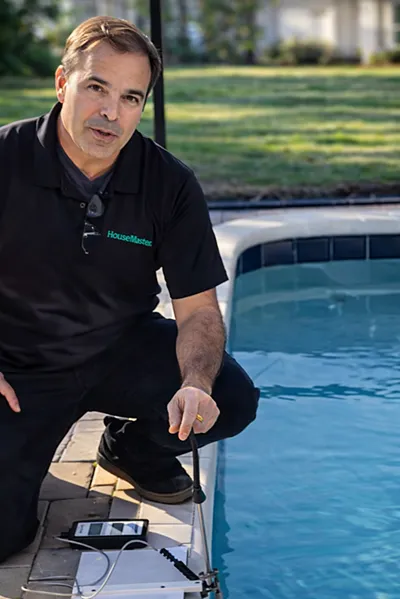
Using tools such as computerized leak detection systems (for example from Leaklyzer - Anderson Manufacturing), a sensor can be installed at the pool edge to measure water level change with much greater precision. Instead of waiting days, this type of test can often provide a good indication if that is leaking or not in approximately 20 minutes.
This is a major advantage during real estate transactions.
The buyer does not have to wait several days. The agent does not have to delay the negotiation process. The results can be discussed during the inspection period while the buyer still has time to make decisions.
For a relatively small additional cost — often around $200 depending on the property and service provider — leak detection can provide valuable information compared to the potential repair cost of a pool leak, which can commonly reach thousands of dollars.
Why Pool Leak Detection Matters
A leaking pool is not always obvious.
Many leaks are hidden underground, inside plumbing lines, behind pool finishes, around fittings, or in areas that are not visible during a standard inspection. The water loss may be gradual enough that the seller does not notice it, especially if the pool has an automatic fill system.
Over time, a pool leak can create several problems. It can increase water bills, affect chemical balance, damage surrounding soil, contribute to erosion, and create repair costs that the buyer did not expect.
In some cases, water loss around the pool structure can affect surrounding decking, patios, or nearby areas. Even if the buyer still wants the home, knowing about a possible leak before closing is valuable because it helps them better understand the condition of the property.
The goal is not to create fear. The goal is to reduce risk and avoid discovering the issue only after ownership changes.
Even New Pools Can Leak
Many buyers assume that if the pool is newer, leak detection is not necessary.
That is not always true.
Even new pools can have leaks due to construction defects, plumbing installation issues, material defects, settling, fittings, or workmanship problems. A pool can look excellent visually and still lose water.
This is especially important in newer communities, vacation homes, and properties with high pool usage. In markets like Kissimmee, ChampionsGate, Winter Garden, Clermont, Minneola, Davenport, and other Central Florida areas, pools are very common, and many homes are used heavily as short-term rentals or seasonal properties.
A newer pool should not automatically be assumed leak-free.
When Should You Do Pool Leak Detection?
In our opinion, leak detection is strongly recommended when buying a home with a pool, especially if the inspection period is short and the buyer wants better information before closing.
It is especially valuable when the pool has visible cracks, waterline concerns, equipment issues, wet areas around plumbing, signs of repeated water loss, an auto-fill system, or unknown maintenance history.
It is also valuable when the buyer simply wants to reduce risk. Most pool leaks are not visible during a normal walkthrough, and a standard pool inspection does not confirm water loss.
If the home has a pool, the cost of testing is often small compared with the potential cost of repairing a hidden leak after closing.
Why Most Inspectors Do Not Offer Pool Leak Detection
Most home inspectors perform standard pool inspections only.
That does not mean they are doing something wrong. Leak detection requires additional equipment, additional training, additional time, and a different process than a typical pool inspection.
Many inspectors do not own computerized pool leak detection equipment. Others may not offer the service because it adds complexity to the appointment. As a result, buyers may not even be told that leak detection is available or that it is separate from the standard pool inspection.
That is why it is important to ask the question directly:
“Does the pool inspection include leak detection, or is that a separate test?”
In most cases, it is separate.
Our Approach at HouseMaster
At HouseMaster, we believe buyers should understand the difference between a standard pool inspection and leak detection before making a decision.
Our pool inspection evaluates visible safety features, electrical concerns, and the overall assessment of the pool equipment operation. When requested, fast leak detection testing can be added to provide a good indication if that is leaking or not during the same inspection process.
This helps buyers better understand the condition of the pool, the equipment, and the possible risk of hidden water loss before closing.
We also combine this with clear reporting, on-site explanations, and AI-powered documentation that helps organize findings in a way buyers and agents can actually use during the inspection period.
The benefit is simple: fewer surprises, faster information, and better decision-making before the transaction moves forward.
Pool Inspection and Leak Detection in Orlando and Central Florida
We provide pool inspections and leak detection services in Orlando and surrounding Central Florida areas, including:
Kissimmee & ChampionsGate
St. Cloud & Davenport
Clermont & Minneola
Winter Garden & Celebration
Winter Park & Maitland
Lake Mary & Sanford
Oviedo & Waterford Lakes
The Villages & Leesburg
Altamonte Springs & Longwood
Pool homes are especially common in many of these markets, including vacation-home communities, newer subdivisions, and larger suburban developments.
Frequently Asked Questions
Is leak detection included in a pool inspection?
No. A standard pool inspection does not confirm whether the pool is leaking. Leak detection is a separate test that requires additional equipment, time, and testing methods.
What does a pool inspection include?
A pool inspection typically evaluates visible safety features, electrical concerns, equipment condition, and the overall assessment of the pool equipment operation at the time of inspection.
How long does pool leak detection take?
Traditional bucket tests can take two to four days. Modern computerized leak detection can often provide a good indication if that is leaking or not in approximately 20 minutes.
Can a pool leak without visible signs?
Yes. Many pool leaks are hidden in plumbing lines, fittings, underground areas, or pool components that are not visible during a standard inspection.
Is pool leak detection worth it?
In many cases, yes. A leak detection test may cost around $200, while pool leak repairs can commonly cost thousands depending on the source and severity of the leak.
Should I do leak detection on a newer pool?
Yes, it can still be valuable. New pools can leak due to installation defects, plumbing issues, settling, or material problems.
Schedule Your Pool Inspection in Orlando
A pool can add tremendous value to a home, but it can also hide expensive problems.
If you are buying a home with a pool, do not assume leak detection is included in the standard inspection. Ask for the right test, get clear information, and understand the pool before closing.
Schedule your pool inspection and leak detection with HouseMaster today.
Call 407-343-4677 or book online.